
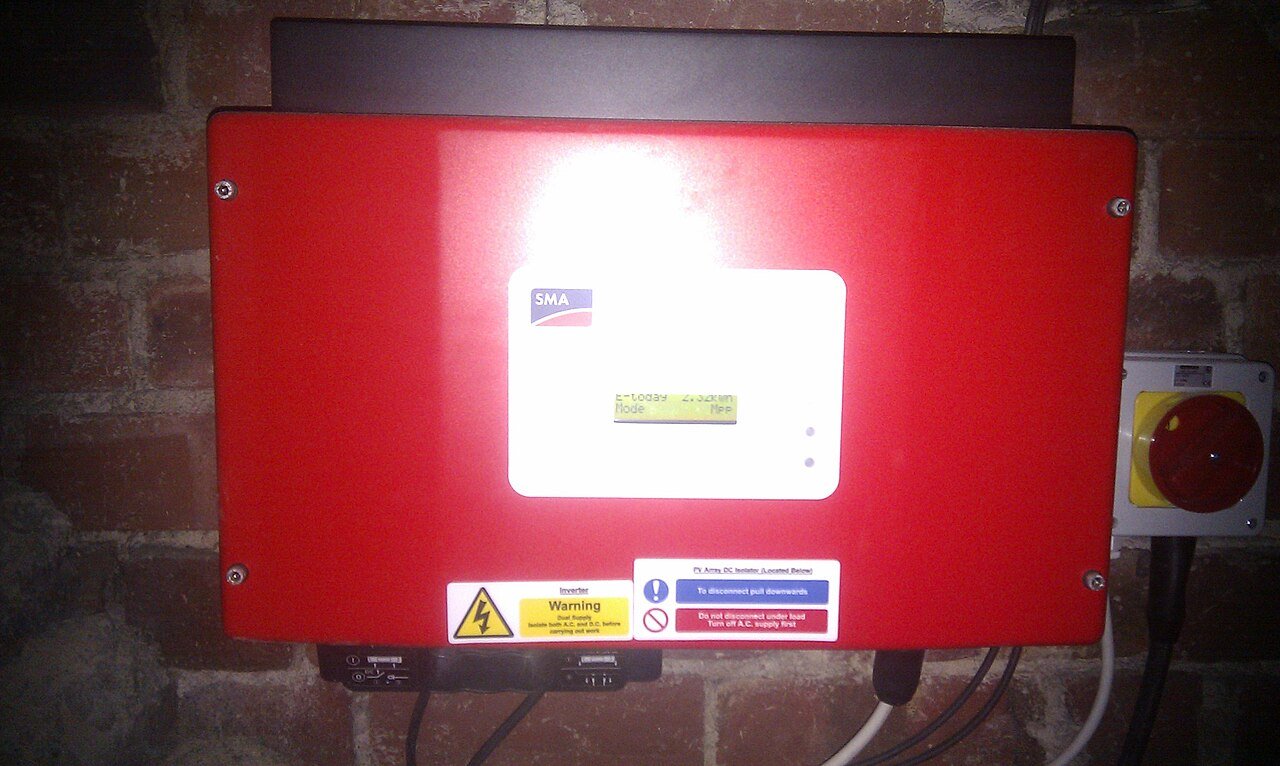
Treat the alarm as a protection event
Grid-tied inverters continuously monitor grid voltage and disconnect when required limits are exceeded. Repeated overvoltage alarms should not be defeated by widening protection settings outside approved grid profiles. Record the exact fault code, time, inverter voltage reading and whether the event occurs mainly during strong solar production.
Separate site voltage from inverter behaviour
Check whether high voltage is visible at the service point and whether other circuits show voltage-related symptoms. A qualified electrician can measure voltage at appropriate points under safe conditions. Long or undersized AC conductors can add voltage rise between the inverter and service, while the distribution network itself can also be operating near its upper limit.
Look for patterns in monitoring data
Compare events with PV output, household load and time of day. Trips clustered around midday with low local load can be consistent with export-related voltage rise, while faults at unrelated times may point elsewhere. Keep screenshots and exported logs before resetting equipment so evidence is not lost.
Do not improvise protection changes
Changing country/grid codes, maximum voltage thresholds or anti-islanding settings can violate connection requirements and create safety risks. Any approved setting change should follow the network operator’s process and manufacturer instructions. Internal electrical work belongs with qualified personnel.
Escalate with useful evidence
Provide the installer or utility with the exact inverter model, firmware, grid profile, fault timestamps and measured service voltage. Also use the commissioning checklist and export-limit guide when assessing recurring network constraints.
Separate a grid condition from an inverter fault
Document the voltage shown by the inverter, the time of each trip, solar output at that moment and whether nearby systems report similar behavior. An installer can then compare measurements at the inverter and point of connection with the local network limits and cable voltage rise. Do not widen protection thresholds merely to stop nuisance trips; settings must remain within the grid code, manufacturer approval and local connection agreement.