
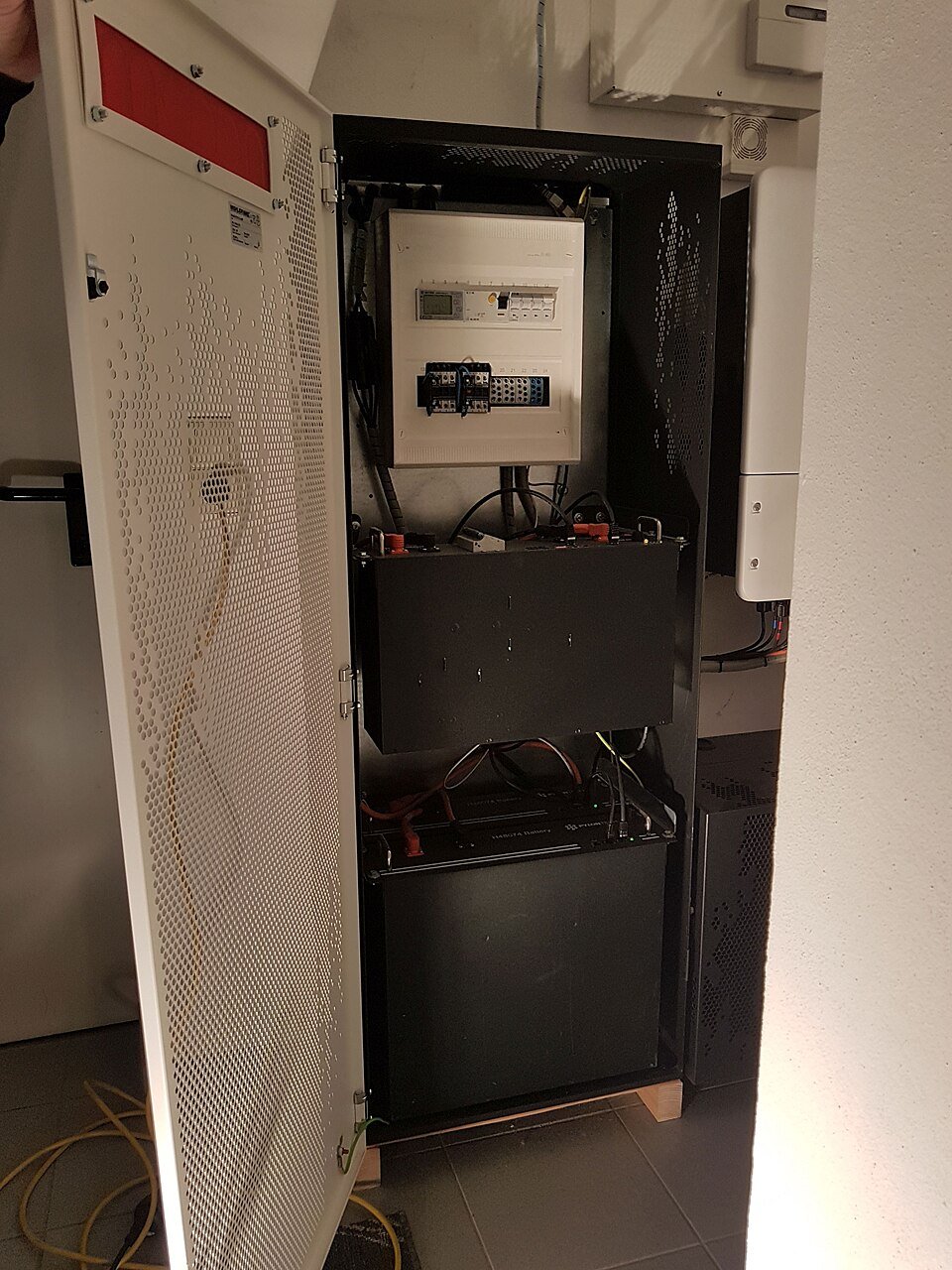
AC coupling can simplify some retrofits
An AC-coupled battery has its own power-conversion hardware and can often be added without replacing a working PV inverter. That can be attractive when the existing solar system is still supported and the retrofit rules permit the new battery system.
Hybrid systems can integrate PV and storage more directly
A hybrid inverter is designed to manage PV and a compatible battery through one system architecture. In a new installation this can reduce duplicated conversion hardware and simplify monitoring, but battery compatibility is usually tied to an approved list and exact firmware.
Efficiency depends on the energy path
Solar energy stored in an AC-coupled battery is converted from DC to AC and then back to DC for storage before another conversion when it is used. A DC-coupled path can avoid some conversions, but real system efficiency depends on operating point, battery losses, standby consumption and controls.
Backup design is product-specific
Neither architecture guarantees whole-home backup. Confirm transfer hardware, backed-up circuits, output power, surge capability, black-start behavior and whether PV can continue operating during an outage.
Plan for future replacements
Ask what happens if the solar inverter, battery inverter or battery reaches end of life first. A modular architecture can be easier to replace in parts, while a tightly integrated system can offer a simpler owner experience. The better trade-off depends on service support and the expected lifecycle of the exact equipment.
Related Melnti checks
AC vs DC coupled overview retrofit checklist quote comparison
Compare installed scope rather than architecture labels
Include meters, gateways, transfer hardware, backup panels, communications, labor and commissioning in the comparison. A lower component count does not always mean a lower installed cost or easier future service.