
Treat the installation manual as the starting boundary
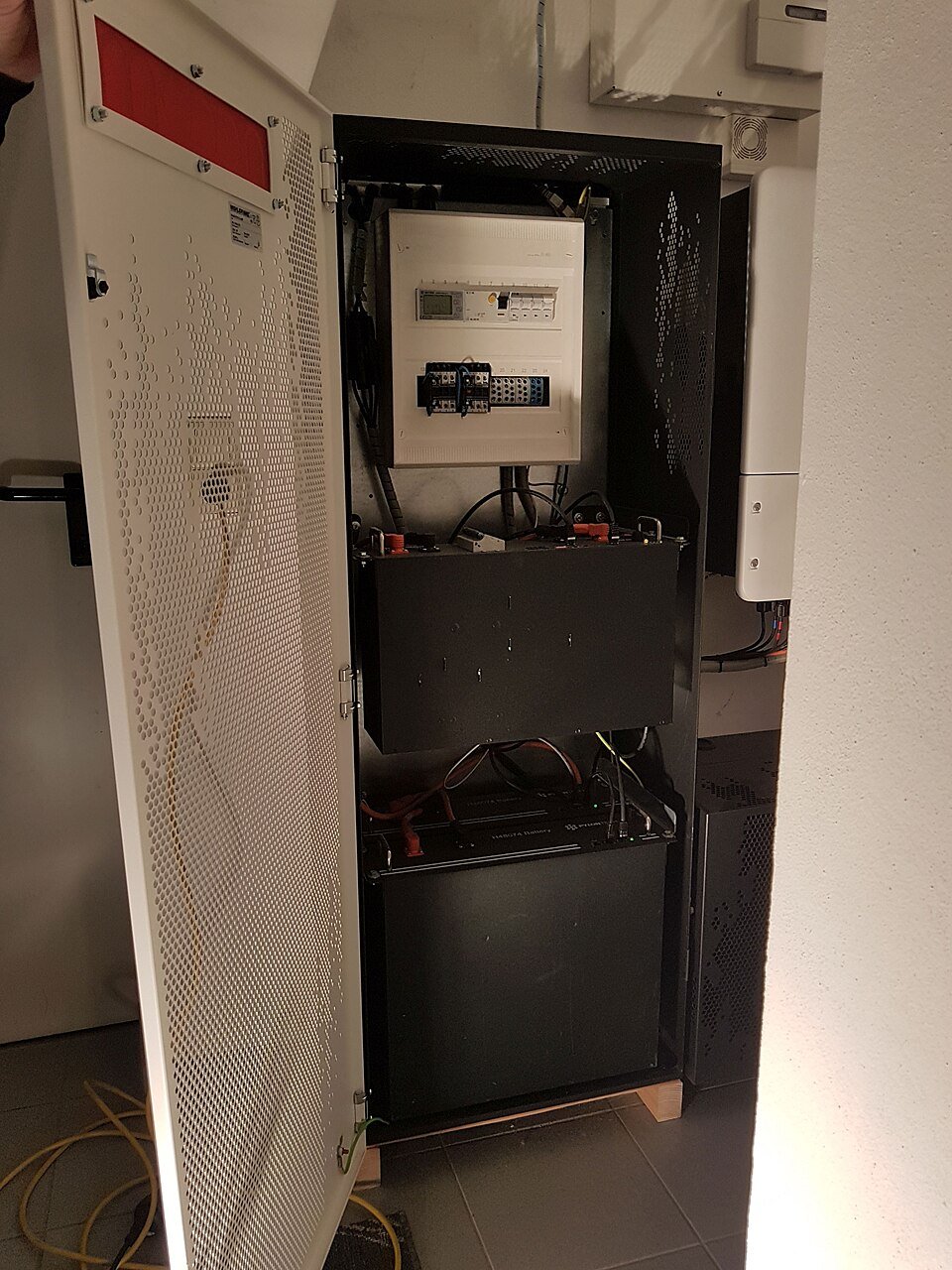
Home batteries have model-specific requirements for wall or floor mounting, separation from ceilings and corners, service access, ambient temperature and protection from water or direct sun. A location that looks convenient can still violate the manufacturer installation envelope. Record the exact battery model, enclosure rating and approved orientation before deciding where it belongs.
Keep working space available
Installers and emergency personnel need safe access to isolators, labels, covers and service points. Do not design a battery into a narrow recess that prevents removal of panels or modules. Future expansion also needs space. If a modular system could grow later, check how additional stacks affect clearances, weight, wall loading and cable routes rather than reserving only enough room for the first module.
Ventilation and temperature are model-specific
Lithium batteries do not all require the same ventilation strategy, but every model has an operating-temperature range and thermal-management assumptions. Avoid boiler rooms, unconditioned roof voids or other spaces that routinely exceed limits unless the manufacturer explicitly permits them. Cold climates also need attention because charging may be limited below certain cell temperatures even when discharge remains possible.
Separate combustible storage and ignition risks
The battery area should not become a general storage corner for fuels, paint, cardboard or other combustible materials. Local codes may prescribe separation from exits, habitable rooms, vehicles, gas equipment or property boundaries. These rules differ by jurisdiction, so Melnti does not turn one country’s clearance number into a universal rule. The installer should document which local code and manufacturer instructions were applied.
Commission the safety functions
A safe physical location is only part of the job. Verify battery-management communications, emergency shutdown behaviour, backup isolation and warning labels during commissioning. Keep manuals and serial numbers with the handover pack so later service technicians know the exact installation conditions and can distinguish a battery alarm from an inverter, communications or grid fault.
Use the checks together
Backup-readiness checklist Commissioning and handover checklist should be used alongside the equipment manuals and local electrical requirements.