
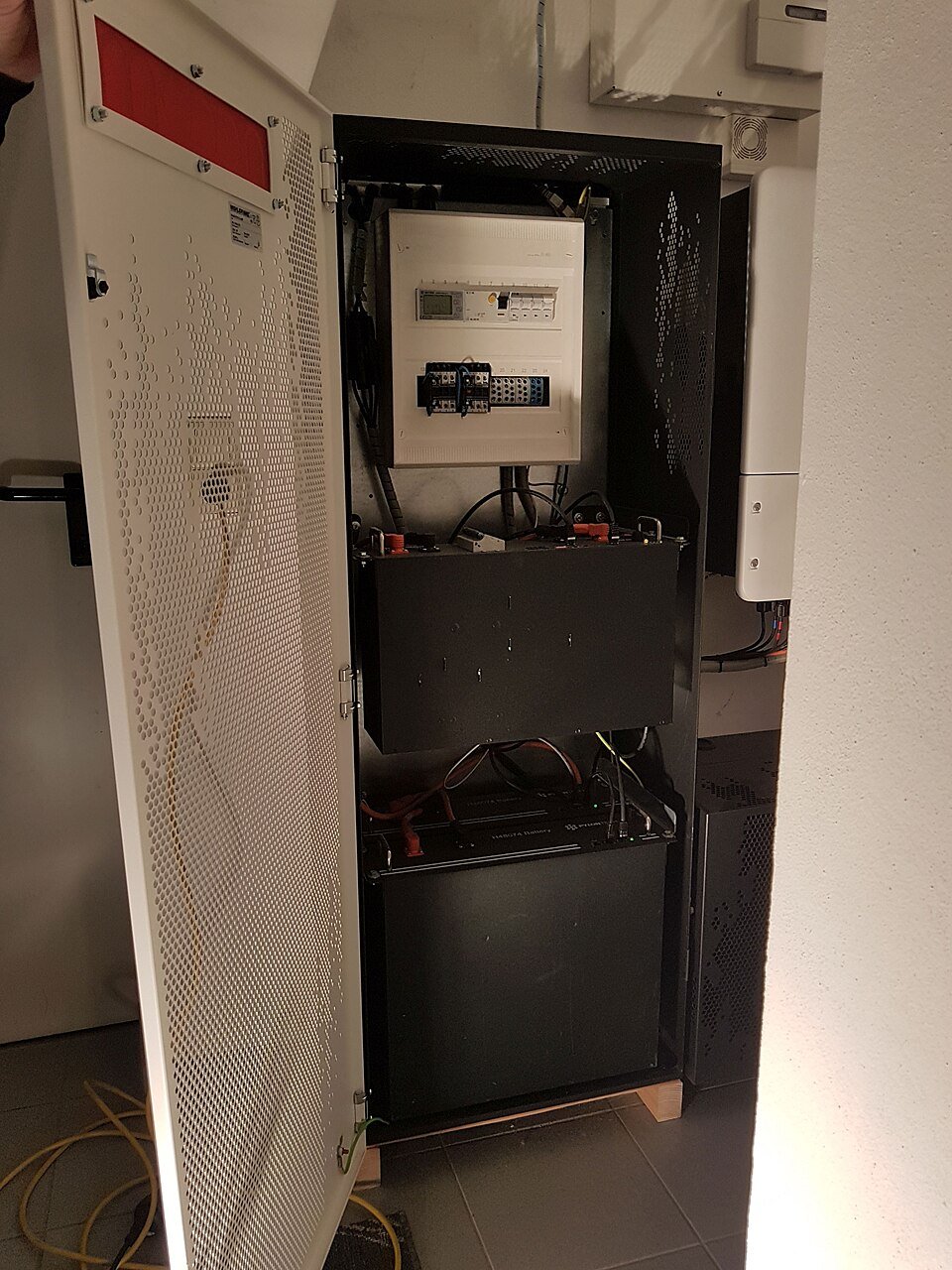
Start with an exact inventory of the existing solar system
Record the PV inverter manufacturer, exact model, firmware, AC rating, phase configuration, array size, monitoring platform, service voltage and existing export settings. Photograph labels and the single-line diagram if available. A retrofit design based on “a 5 kW solar system” is not enough because control behaviour and islanding compatibility can vary by inverter generation and region.
AC coupling does not mean universal compatibility
An AC-coupled battery has its own bidirectional inverter, but it still interacts electrically and operationally with the existing PV inverter and grid connection. Confirm whether the battery manufacturer supports the proposed topology, especially for backup operation. Some systems can frequency-shift or otherwise control compatible PV during an outage; others may require the PV inverter to shut down. Use the compatibility guide to document the exact pair.
Recheck the main switchboard and service limits
Adding battery charging and discharging can change current flows through the service, busbars and distribution equipment. Verify main-board rating, breaker positions, conductor sizes, fault-current capability and any local busbar rules. A retrofit may need a gateway, backup panel or service upgrade even though the existing PV installation was compliant when originally installed.
Export control must coordinate across both systems
Where the utility imposes a site export limit, confirm how the new battery and existing PV will respect it together. A separate meter, current transformers or energy-management controller may be required. Do not assume two independent manufacturer export controls will automatically coordinate. Test actual import/export behaviour during commissioning.
Backup topology should be explicit before quoting
Decide whether the goal is no backup, selected essential loads or whole-home backup. That choice affects transfer equipment, circuit relocation and battery power requirements. Review the transfer-switch and gateway checklist when whole-home operation is proposed.
Preserve a before-and-after commissioning record
After installation, record firmware versions, meter orientation, export settings, backup configuration, battery usable capacity settings and the final one-line diagram. Test grid loss and restoration if backup is enabled. This makes later service work far easier and helps separate a retrofit problem from a pre-existing PV fault.