
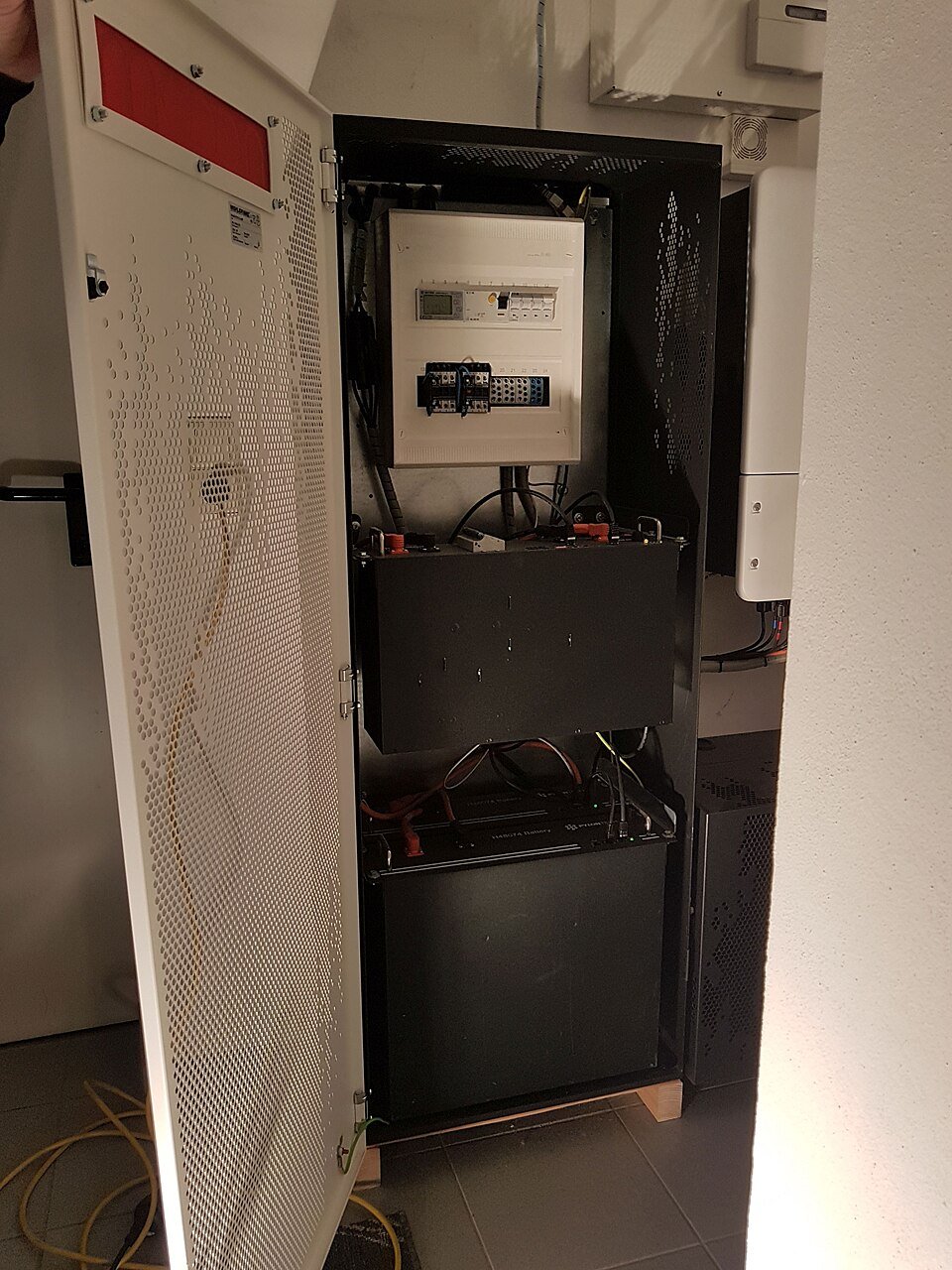
Charging and discharging temperature limits can differ
A battery may be able to discharge at a temperature where charging is restricted or prohibited. Lithium-based batteries in particular can have manufacturer-defined low-temperature charging limits designed to protect the cells. Always use the exact battery manual and BMS documentation; a generic chemistry rule is not a substitute for the model-specific operating envelope.
The BMS may reduce power before a hard cut-off
Many systems derate charge current as temperature approaches a limit, then block charging below a threshold. The inverter or energy-management system must respect those commands. If communication fails, the safe fallback behaviour matters. Confirm the approved communications link and any firmware requirements using Melnti’s battery-inverter compatibility guide.
Self-heating changes the design but not the need for verification
Some batteries include internal heaters or support external thermal management. Check what powers the heater, when it activates, how much energy it consumes and whether heating is available during a prolonged outage. A cold empty battery may not have enough stored energy to warm itself without another source.
Enclosure location controls the real cell temperature
Outdoor air temperature is not necessarily the same as battery temperature. Sun exposure, insulated cabinets, garages and utility rooms all change thermal conditions. Respect clearance and ventilation requirements; do not add improvised insulation or heaters that conflict with fire, ventilation or manufacturer instructions.
Cold weather affects available power and energy too
Even when operation remains allowed, batteries can show lower charge acceptance, reduced discharge power or less accessible energy at low temperature. Backup-runtime estimates should therefore include environmental conditions rather than assuming the room-temperature nameplate value. The battery-runtime calculator is a planning aid, not a replacement for the manufacturer derating curves.
Commission temperature controls before winter
Verify temperature sensors, heater operation, BMS communications, charging limits and any weather-dependent reserve settings. Record normal and low-temperature alarms so the owner knows whether a winter warning indicates expected protection or an actual fault.