
Start with two separate questions
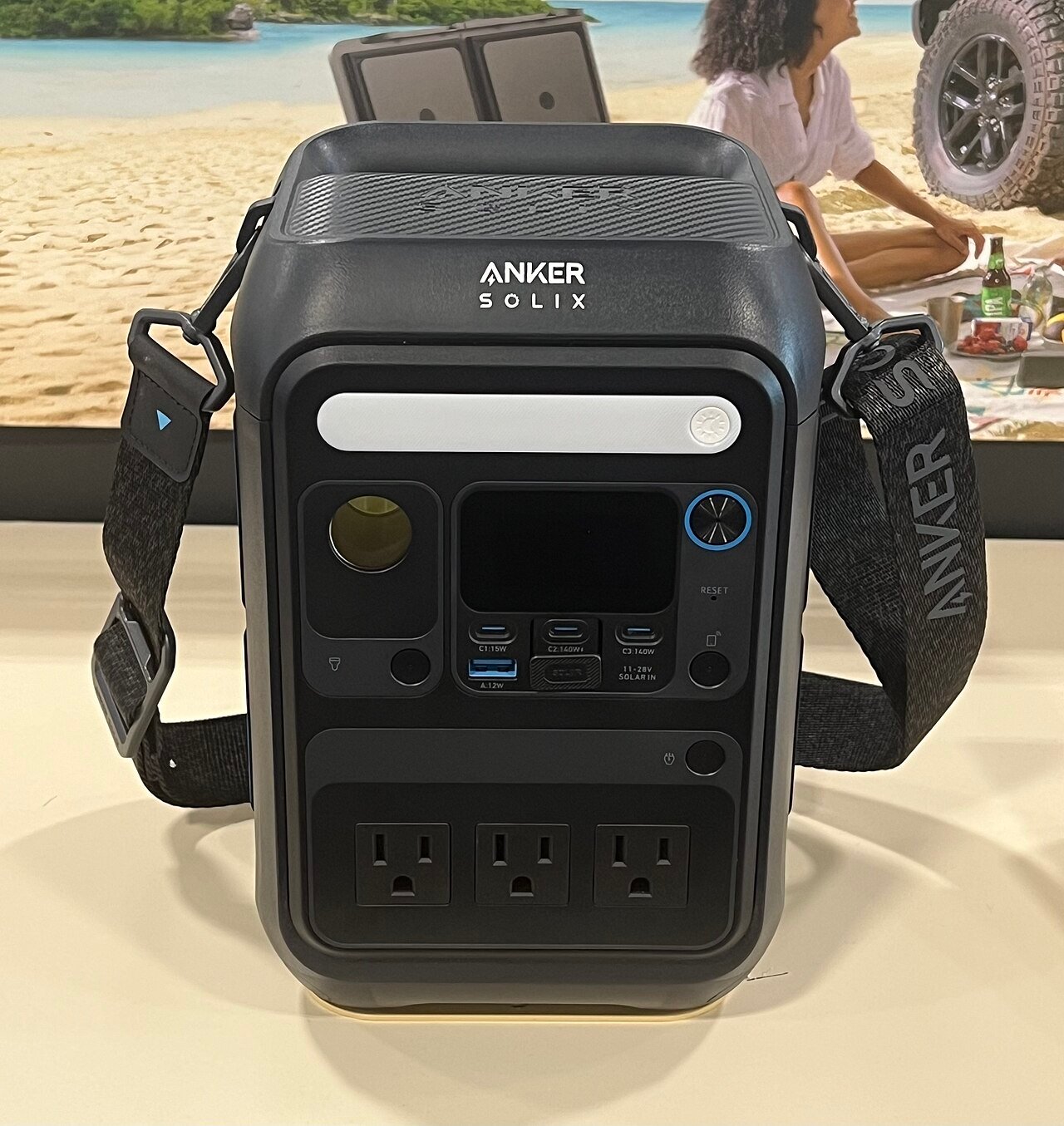
A portable power station has to meet both an energy requirement and a power requirement. Capacity in Wh or kWh helps estimate runtime. Inverter output in W or kW determines whether the unit can run the appliance at all. A large battery with a small inverter can still fail on a high-power load, while a powerful inverter with a small battery may run the load only briefly.
Step 1: estimate daily energy
List the appliances you actually want to support. Multiply each appliance’s average power by hours of use, then add the results. Cycling appliances such as refrigerators and air conditioners are better estimated from a plug-in energy meter or manufacturer energy-use data than from the maximum wattage printed on the label.
For example, a constant 100 W load running for ten hours uses about 1,000 Wh before conversion losses. A 2,048 Wh power station therefore does not mean you should assume exactly 20.48 hours of runtime at 100 W. Inverter losses, reserve behavior, standby consumption and changing loads reduce delivered energy.
Step 2: check the highest simultaneous load
Add the appliances likely to run at the same time. Then identify compressors, pumps, refrigerators, air conditioners and power tools that may have a short starting surge. Compare both continuous output and surge behavior with the exact manufacturer’s specifications.
Useful starting classes
| Nominal class | Typical starting use cases | What to verify |
|---|---|---|
| ~1 kWh | Networking, lights, electronics, modest refrigerator backup | Port mix, inverter output and runtime |
| ~2 kWh | Longer essential-load backup, camping, RV and moderate appliances | Solar input, recharge time and high-power appliance compatibility |
| ~3–4 kWh | Higher-output home essentials, longer outage windows and larger mobile loads | Weight, transfer method, expansion and whether a stationary system would be better |
Step 3: decide how you will recharge
A unit used for one short outage can be recharged slowly from the grid later. A unit used off-grid every day may need enough solar input to replace yesterday’s energy during the available sun window. Check both the power limit and the allowed PV voltage/current range before connecting panels.
Step 4: do not overspend on portability you do not need
Portable stations are convenient because battery, inverter, charger, controls and outlets arrive in one enclosure. For permanent multi-circuit home backup, a stationary battery/inverter system can be more serviceable and scalable. Compare the architecture before assuming the biggest portable unit is automatically the best home solution.
Build your load with the appliance-load calculator, estimate runtime with the battery-runtime calculator, then compare current products in the Melnti product library.