
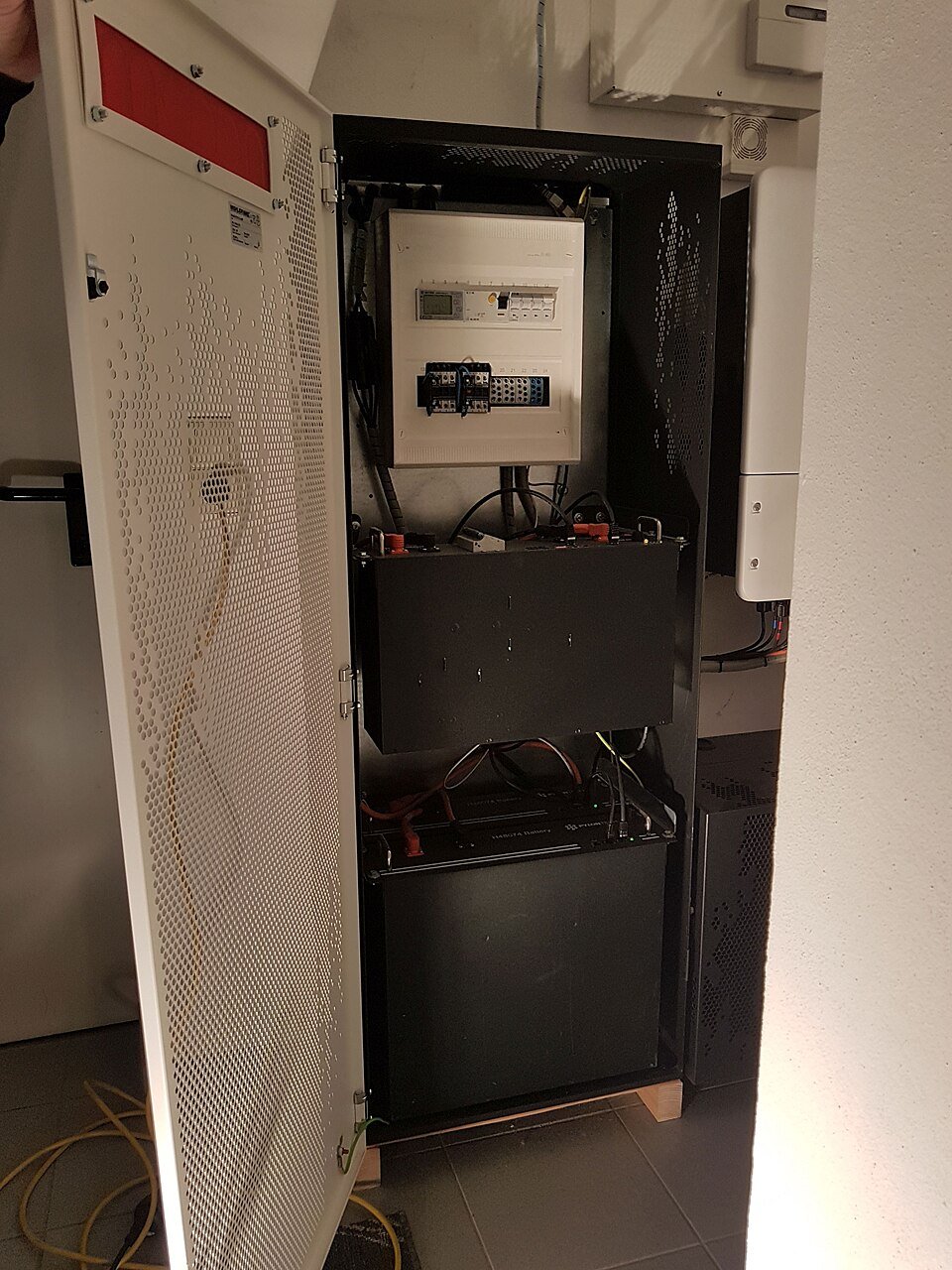
The same total kWh can be packaged very differently
A home may reach roughly the same usable capacity with one large enclosure or several smaller modules. That does not make the systems equivalent. A single enclosure can simplify footprint, cabling and commissioning, while a modular stack can offer staged expansion or easier module-level replacement. The real comparison is the complete manufacturer’s architecture, including inverter, BMS, disconnects, gateway and permitted module count.
Redundancy depends on failure behaviour
Multiple modules do not automatically mean the system keeps working if one module fails. Some battery stacks shut down the entire string or tower when one component reports a fault. Other architectures can isolate a module or operate at reduced capacity. Ask what the manufacturer’s documented failure mode is rather than assuming modularity equals redundancy.
Power may or may not scale with capacity
In some systems additional modules increase both energy and allowable charge/discharge power; in others the inverter or central controller remains the bottleneck. Compare continuous and peak output using the battery power guide. Also confirm whether additional units change backup performance at low SOC or temperature.
Think about future servicing before choosing
Large enclosures may require more space and handling equipment, while modular systems can introduce more interconnects and firmware dependencies. Later expansion can be constrained by module age or revision; see the mixed-age expansion checklist. Compare installed price, usable energy, warranted throughput, power, service access, replacement strategy and the installer’s demonstrated support capability. The best architecture is the one that remains maintainable over the expected life of the system, not simply the one with the fewest or most boxes.