
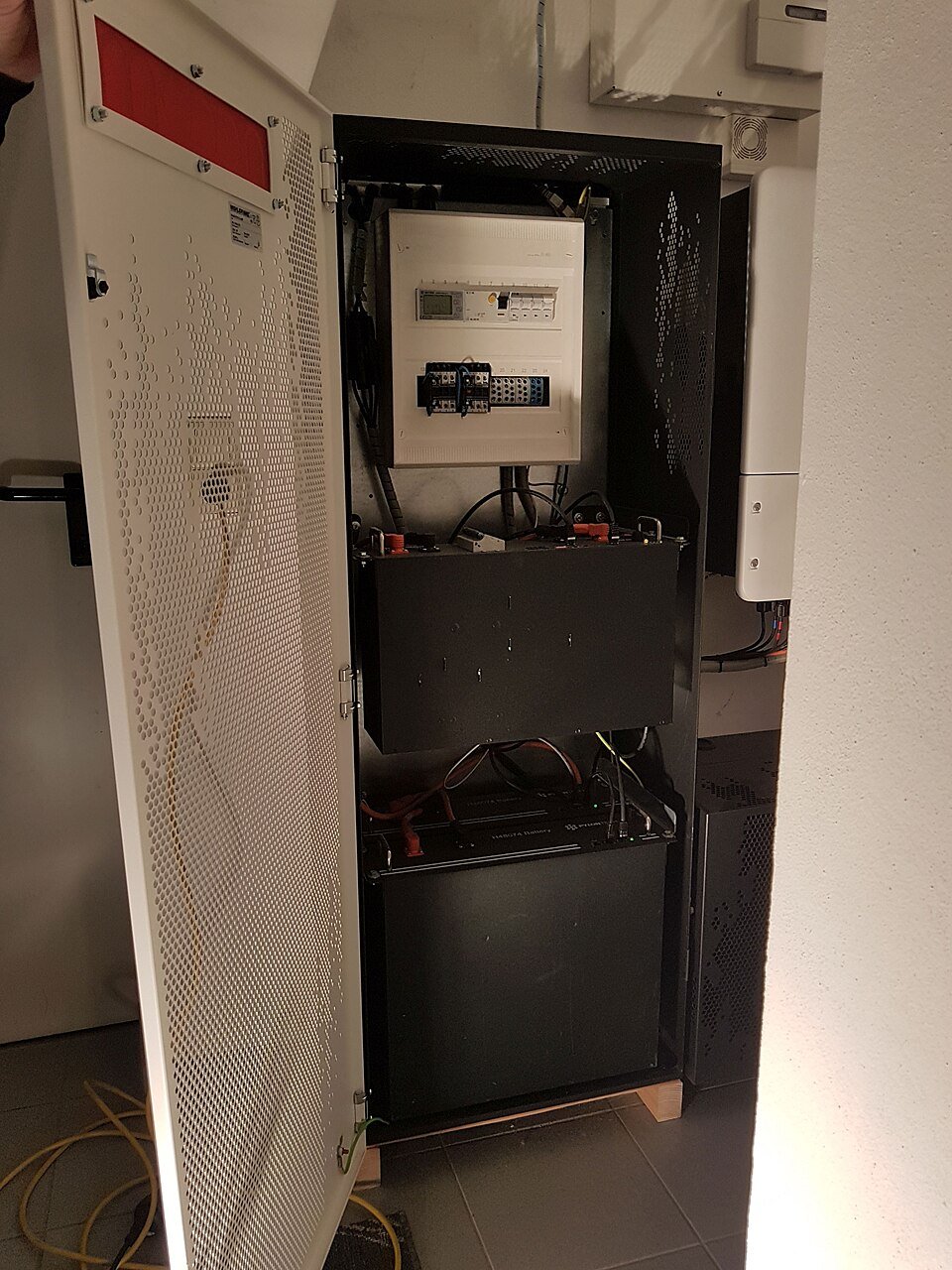
The enclosure format changes how a system grows and is serviced
Rack-mount LiFePO4 batteries are commonly built as repeatable modules installed in a cabinet or rack and connected to a shared DC bus within a documented architecture. Wall-mount batteries concentrate more capacity into one or several larger enclosures. Either format can work well, but they create different requirements for floor or wall structure, cable routing, protection, clearances and access during service.
Do not infer electrical compatibility from a 48 V label
Two low-voltage batteries can have different operating windows, current limits, BMS protocols and parallel rules. An inverter may support one exact battery firmware family and reject another. Before comparing enclosure convenience, confirm the manufacturer’s approved inverter-battery combination and the allowed number of parallel modules. The BMS communication checklist covers the evidence to request.
Expansion has both advantages and constraints
A rack can make incremental capacity additions straightforward when the manufacturer explicitly supports mixing the relevant module revisions and ages. A wall-mounted system may also be modular, sometimes with simpler cabling or integrated switching. In both cases later expansion may be limited by battery age, firmware, bus current, inverter current, state-of-charge balancing or maximum unit count. “Expandable” should therefore be backed by an actual supported expansion procedure.
Compare total installed system, not just price per kWh
Include cabinet or wall hardware, approved disconnects, communications, current capacity, environmental rating, maintenance access and installer familiarity. The high-voltage vs low-voltage comparison is useful if the choice also changes battery-voltage class. A rack is not automatically commercial-grade and a wall battery is not automatically easier; the better architecture is the one whose complete system fits the site and has clear manufacturer support.