
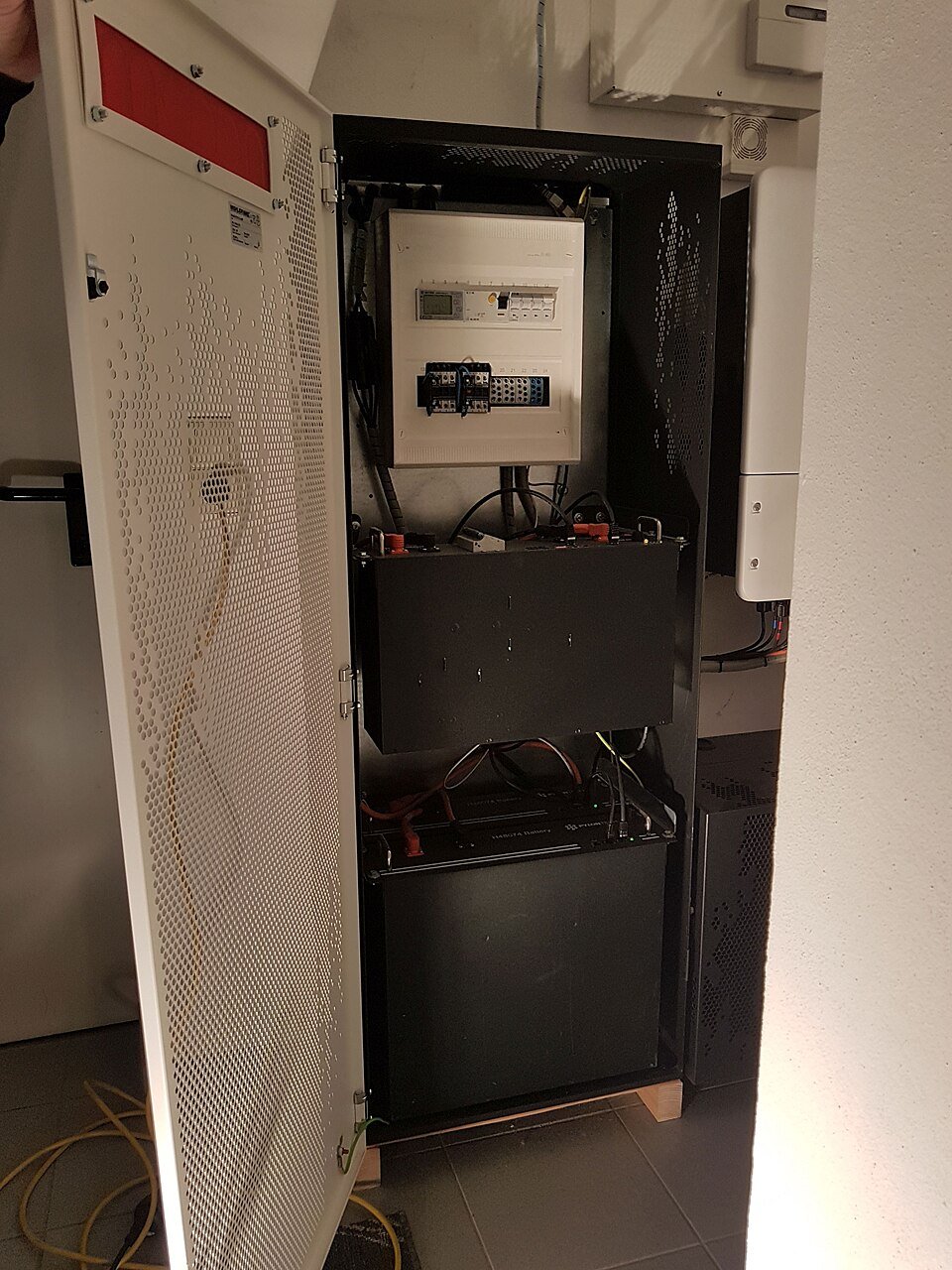
The difference is the electrical path, not just the battery
Solar panels and batteries operate on direct current (DC), while most homes and the grid use alternating current (AC). A battery can be integrated on either side of the solar inverter. The U.S. Department of Energy describes DC-coupled solar-plus-storage as sharing a bidirectional inverter path, while AC-coupled systems use a PV inverter plus a battery inverter.
| Question | AC-coupled | DC-coupled |
|---|---|---|
| Typical retrofit fit | Often easier to add to an existing PV system because the existing solar inverter can remain | Often strongest when solar and storage are designed together around a compatible hybrid inverter |
| Conversion path | PV DC becomes AC before battery charging requires another conversion to DC | PV DC can charge the battery on the DC side before one inverter converts energy for AC loads/grid |
| Compatibility focus | Battery inverter, grid connection, backup controller and existing PV system | Exact battery-to-hybrid-inverter voltage, communication and firmware support |
| Backup design | Requires a supported islanding/backup architecture; not every AC battery automatically backs up the home | Requires the hybrid inverter and transfer/backup hardware to support the intended loads |
Retrofit versus new installation
For an existing PV system, AC coupling can avoid replacing a working solar inverter. For a new solar-plus-storage project, DC coupling can reduce conversion stages and simplify a tightly integrated design. Neither architecture is automatically better for every property.
Compatibility comes before efficiency claims
An efficient architecture that is not supported by the exact inverter, battery, backup hardware or local grid rules is not a usable design. Use Melnti’s battery and inverter compatibility checklist and compare the exact product documentation.
Examples of current DC-coupled ecosystems include Fronius Reserva with compatible Fronius hybrid inverters and SolarEdge Home Battery 48V with supported SolarEdge three-phase inverters.